Showing posts with label Rajita Chaudhuri. Show all posts

Thursday, November 01, 2012

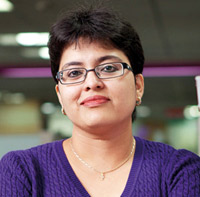
Aparna Ballakur (Vice President – HR, Yahoo! in India) tells Sayani Sinha Roy the Yahoo! workforce settles for nothing less than an addictive combination of Work, Opportunity, and Workplace

Q. How does Yahoo! retain its top employees?
A. At Yahoo! we settle for nothing less than an addictive combination of work, opportunity and workplace, or ‘WOW’, as we call it. The ‘work’ we do is fun, since we build cool stuff that impacts over 700 million users on the internet. I think the ability to touch millions of people across the world on a daily basis continues to be one of the most appealing aspect. Our employees get the ‘opportunity’ to work on bleeding edge innovation, alongside some of the best minds in the business. The opportunity that we give to our employees is our USP. We have created a work environment that is flexible, open and conducive to building a diverse and inclusive workforce.
Q. How has Yahoo! evolved in your tenure?
A. Yahoo! was early to realise India’s potential to emerge as an epicentre of high-end R&D, delivering strong internet products. We started with a small team and today R&D centre at Bangalore is the second largest R&D hub of Yahoo!

In the last few years, the centre has leapt the value chain, reinventing itself from an engineering centre to a customer-centric innovation hub that is making a strategic impact globally.

Q. Based on your experience, what role does HR play in M&A?
A. M&A brings unique people challenges that are outside the domain of business’ regular functioning. By keeping people issues front and centre, understanding HR’s role in each of the critical phases of the deal’s life cycle, and facilitating smooth culture integration, HR can effectively support the business and help achieve solid results from the transaction. A good way to measure a successful M&A is to pay attention to retention and engagement and ensuring that the new latent is leveraged well.

Q. Define your leadership style.
A. I believe in guiding, setting and communicating clear direction, goals and plans for my team and then leave it on them as to how they want to execute it. I feel that micromanagement can erode the confidence and motivation of employees. It is important for a leader to be direct. You need to clearly establish performance expectations and commitments with your employees and others. I believe in clearly identifying the goals and roles in the organisation and then helping leaders understand what they need to accomplish with teams.

Q. How do you manage time between work and family?
A. I believe in work-life integration and do not compartmentalise the two. You need to prioritise time; there will be days when work will take precedence and days when you will need to take time off for a family commitment. It is rare that on the same day you have pressing issues on both the sides. click here to continue...

Read More IIPM Related Articles
Zee Business Best B-School Survey 2012
Prof. Arindam Chaudhuri's Session at IMA Indore
IIPM IN FINANCIAL TIMES, UK. FEATURE OF THE WEEK
IIPM strong hold on Placement : 10000 Students Placed in last 5 year
IIPM's Management Consulting Arm-Planman Consulting
Professor Arindam Chaudhuri - A Man For The Society....
IIPM: Indian Institute of Planning and Management
IIPM makes business education truly global
Management Guru Arindam Chaudhuri
Rajita Chaudhuri-The New Age Woman
IIPM B-School Facebook Page
IIPM Global Exposure
IIPM Best B School India
IIPM B-School Detail
IIPM Links
IIPM : The B-School with a Human Face

Wednesday, October 31, 2012

Judicious Structure and Strategy

Suparshwa is CEO of Mobilink Telesystems Company, manufacturers of one of the oldest and largest telecommunication products including consoles. Suparshwa joined as marketing manager in 2006, when the survival of Mobilink Telesystems Company (MTC) was in question on account of fast-changing technology in telecommunication products besides the recession in the economy at large. Suparshwa rose to become the CEO by early 2011.

As a marketing manager – with a masters degree in technology from NITIE, Mumbai, and post graduation in management from a leading institute of Mumbai – Suparshwa had the credit for turning MTC into a profitable and commercially successful firm.

MTC originally started as a trading unit of telesystems products through acquisition of agency and dealership of the then known telesystems manufacturers in 1990. Later in 1995, MTC had set up a manufacturing facility at Gandhinagar in Gujarat for manufacturing key pressed telephone instruments with voice recording facility.

MTC continued to expand over the years, and by 1999 had another two production units, dedicated to small private automatic branch exchange manufacturing and telephone line diversion machines, in the adjoining cities– Ahmedabad and Dholka. Dholka had been selected because a few government sops were available.

During those times, MTC managed to receive good quantum of product order as the test and fashion of society were changed. MTC used to produce its own goods under its brand name. Click here to read more...

Read More IIPM Related Articles
Zee Business Best B-School Survey 2012
Prof. Arindam Chaudhuri's Session at IMA Indore
IIPM IN FINANCIAL TIMES, UK. FEATURE OF THE WEEK
IIPM strong hold on Placement : 10000 Students Placed in last 5 year
IIPM's Management Consulting Arm-Planman Consulting
Professor Arindam Chaudhuri - A Man For The Society....
IIPM: Indian Institute of Planning and Management
IIPM makes business education truly global
Management Guru Arindam Chaudhuri
Rajita Chaudhuri-The New Age Woman
IIPM B-School Facebook Page
IIPM Global Exposure
IIPM Best B School India
IIPM B-School Detail
IIPM Links
IIPM : The B-School with a Human Face

Tuesday, October 16, 2012

A Guide for Error-Free Interviewing

A high attrition rate, especially among newly recruited employees is a major concern today. It has negative consequences for the organisation, especially when attrition is in areas where employees interface with customers. While reasons for attrition may be many, an early departure clearly indicates a failure in the selection process. The challenge facing managers is how to recruit right, and perhaps do away with attrition! There may be no guarantee for this, but it is possible to minimise the risk of a selection failure.

Evaluation methods like assessments and psychometric tests can help in selection by giving insights about candidates. However, these tools are expensive and time-consuming, and usually not available to managers when needed.

A personal interview is the decider in any selection process and it is important for managers to develop interview skills for making reasonable assessments. An interview is often an adhoc affair, sandwiched between a hectic work day, which gives managers very little time to understand the candidate’s profile and match it to the specific job requirement. Sometimes, the manager is under pressure to fill a vacancy and this can cloud rational decision making. Experienced managers have their own profile of who a good candidate may be and go by this judgement to make hiring decisions. They would naturally frame their questions to test the candidates on such attributes, but these may not necessarily match the requirements of the position to be filled. Such factors give managers very little time to plan for an interview or their focus during it may deviate from factors specific for the job at hand. Click here to read more...

Read More IIPM Related Articles
Zee Business Best B-School Survey 2012
Prof. Arindam Chaudhuri's Session at IMA Indore
IIPM IN FINANCIAL TIMES, UK. FEATURE OF THE WEEK
IIPM strong hold on Placement : 10000 Students Placed in last 5 year
IIPM's Management Consulting Arm-Planman Consulting
Professor Arindam Chaudhuri - A Man For The Society....
IIPM: Indian Institute of Planning and Management
IIPM makes business education truly global
Management Guru Arindam Chaudhuri
Rajita Chaudhuri-The New Age Woman
IIPM B-School Facebook Page
IIPM Global Exposure
IIPM Best B School India
IIPM B-School Detail
IIPM Links
IIPM : The B-School with a Human Face

Saturday, July 07, 2012

Chinese Fire vs Indian Thunder

Considering how they made The Incumbents Bleed, both Micromax and G’Five have been Revelations in The Indian Mobile handset Industry. Now they are Increasingly getting in each Other’s Way

Ages ago, Charles Darwin coined the phrase “survival of the fittest”. His words make all the more sense in today’s era where change happens overnight. And verdicts are given on the victor and the vanquished in much lesser time. In fact, one can safely adapt Darwin’s theory and say that this is the era of survival of the “fittest and the swiftest”. The Indian handset industry, with estimated sales of around 10-12 million units every month, currently has its hands full with a number of players already in the race for a slice of the pie; of course, the larger, the better. But with that perspective, comes the fact that there are always newer players looking to get their foot inside the doorstep. This market, which earlier boasted of only a handful others, was redefined a few years back by a clutch of companies, which made the incumbents bleed, and profusely. Micromax and G’five are two brands, in particular, that emerged from the resultant hostilities to become prominent players in their own right. And while they both have benefitted from attacking the leaders, they are off late increasingly finding themselves in each other’s way. And given the fact that they perhaps are the most acerbic competitors in the market front, 4Ps B&M decided to cover them in this section of Marketers@War..

Micromax established a new business model in India by importing handsets – as there are no duties levied – and selling them in the Indian handset market. Most imports are occurring from China, Hong Kong, Taiwan and other east Asian countries. Off late, the Chinese players have also realised the potential and growth opportunities and entered directly. And Honk Kong based G’Five, irrespective of its lineage (how many of us associate Hong Kong with consumer electronics?), is playing on similar tunes.

Micromax and G’Five are competing in the Indian market on a common principle – offering exceptional value for money to their users and becoming the alternatives to the incumbent MNCs. However, they are not similar in their actual method of approach. Micromax, since its inception, has adopted an aggressive marketing campaign to promote its brand. It has leveraged both cricket and Bollywood (it roped in Bollywood superstar Akshay Kumar, a testimony to its ambitions) and indulged in a number of visibility campaigns. “Our target audience identifies itself with cricket, Bollywood and music. That is why we have been marketing our product around them,” points out Pratik Seal, Head Marketing, Micromax.

On the other hand, G’Five has remained a silent killer in the industry and hardly promoted its products or its brand at the national level. It therefore came as a shock when IDC reported that G’Five has emerged as the largest handset player in India after Nokia for the quarter ending September 2010. Nokia further slipped by around 5% to post a market share of 31.5% and G’Five took the second spot with 10.6%; beating Samsung at 8.2%.“Yes, I agree that G’Five as a brand was not visible in the Tier I cities and metros. But we have been doing enough branding and marketing campaigns in Tier II and III cities,” says Arshit Pathak, Managing Director, G’Five. In the initial stages, the company has been targeting Tier II and Tier III cities, and 80% of sales of G’Five handsets are coming from these cities. After having reached a formidable position, G’Five is now positioning itself in metros and Tier I cities. It is also looking forward to tie-ups with some of the large format retail outlets.

For more articles, Click on IIPM Article

Source : IIPM Editorial, 2011.

An Initiative of IIPM, Malay Chaudhuri and Arindam chaudhuri (Renowned Management Guru and Economist).

For More IIPM Info, Visit below mentioned IIPM articles.
IIPM Best B School India
Management Guru Arindam Chaudhuri
Rajita Chaudhuri-The New Age Woman
IIPM's Management Consulting Arm-Planman Consulting

IIPM Proves Its Mettle Once Again.....

IIPM Prof. Arindam Chaudhuri on Internet Hooliganism
Arindam Chaudhuri: We need Hazare's leadership
Professor Arindam Chaudhuri - A Man For The Society....
IIPM: Indian Institute of Planning and Management
IIPM RANKED NO.1 in MAIL TODAY B-SCHOOL RANKINGS
Planman Technologies

Thursday, March 01, 2012

An expression that changed India

Amidst all the tumultuous times that telecom saw in India, the Bharti Airtel brand has managed to stay on top. But things are getting even tougher...

“A pessimist sees the difficulty in every opportunity; an optimist sees the opportunity in every difficulty.” Chairman and Group CEO Bharti Enterprise Sunil Bharti Mittal’s entry into the telecom business was accidental. Mittal, an importer of portable electric generators, was overnight out of business in the early 1980s when the then government banned imports of generators in India. It was his sheer enterprising ability and sensing of opportunity in difficulty, which took him ahead. While roaming around in Taiwan, he happened to notice the popularity of push-button phones. At that time, Indian users were still struggling with rotary dials phones with no speed dials or a redial button. He sensed the opportunity and started promoting push button telephones, answering and fax machines under the Beetel brand. Mittal’s vision turned the Rs.20,000 investment, which he had borrowed from his father to start the manufacturing of bicycle crankshafts for local manufacturers, into a $ 8.3 billion company (as per Forbes India).

Mittal also learned that while your first venture is the closest to your heart, it is rarely your big bang. In 1995, Mittal entered into the telecom services space with Airtel, which ultimately became the big bang he was looking for. At that time, the cost of handsets was around Rs.45,000, equivalent to the price of a pre-owned Fiat; and call charges were as high as Rs.16 per minute. But Mittal was confident about the services as it had given Indians the “Power to keep in Touch” with their loved ones, friends and business associates 24X7. And that is the reason why Bharti Airtel launched its first positioning as ‘Power to keep in touch’. At that time the target audience of the services was the elite group of age 25 years and above. This positioning was retained for over five years.

In 1999, when the new National Telecom Policy (NTP) was announced, the rules of the game suddenly changed. The new policy replaced the license fee with a revenue sharing scheme and extended the period of license to 20 years from 10. The service provider passed the benefits to users, resulting in cheaper tariff rates and greater penetration into Tier I cities. Mobile tariffs had come down to Rs.4 per minute and handsets became available at around Rs.15,000. Handsets became slim and SMS was introduced as a service. Pre-paid services were born, helping users to keep a tab on the usage. Bharti then repositioned itself with the punch line – Touch Tomorrow – and also started targeting youths below 25 years with handsome purchasing power.

Come 2002 and Airtel roped in A. R. Rehman. It was the first and last brand that A. R. Rehman got associated with. At the same time, Airtel also repositioned itself on the emotional plank with ‘Live every moment’. Since then, Bharti’s branding exercise has retained an emotional appeal. “Over the years, the brand has evolved to reflect the changing environment and customer preferences. In 2002, we introduced the current identity of our brand and since then, the revenues of this brand have grown by nearly 50 times, with our customer base increasing by 80% year on year,” says Mohit Beotra, Head- Emerging Business, Bharti Airtel.

For more articles, Click on IIPM Article

Source : IIPM Editorial, 2012

An Initiative of IIPM, Malay Chaudhuri and Arindam chaudhuri (Renowned Management Guru and Economist).

For More IIPM Info, Visit below mentioned IIPM articles.

IIPM Best B School India
Management Guru Arindam Chaudhuri
Rajita Chaudhuri-The New Age Woman
IIPM's Management Consulting Arm-Planman Consulting

IIPM Proves Its Mettle Once Again.....

IIPM Prof. Arindam Chaudhuri on Internet Hooliganism
Arindam Chaudhuri: We need Hazare's leadership
Professor Arindam Chaudhuri - A Man For The Society....
IIPM: Indian Institute of Planning and Management
IIPM RANKED NO.1 in MAIL TODAY B-SCHOOL RANKINGS
Planman Technologies

Thursday, December 29, 2011

Chinese Fire vs Indian Thunder

Considering how they made The Incumbents Bleed, both Micromax and G’Five have been Revelations in The Indian Mobile handset Industry. Now they are Increasingly getting in each Other’s Way

Ages ago, Charles Darwin coined the phrase “survival of the fittest”. His words make all the more sense in today’s era where change happens overnight. And verdicts are given on the victor and the vanquished in much lesser time. In fact, one can safely adapt Darwin’s theory and say that this is the era of survival of the “fittest and the swiftest”. The Indian handset industry, with estimated sales of around 10-12 million units every month, currently has its hands full with a number of players already in the race for a slice of the pie; of course, the larger, the better. But with that perspective, comes the fact that there are always newer players looking to get their foot inside the doorstep. This market, which earlier boasted of only a handful others, was redefined a few years back by a clutch of companies, which made the incumbents bleed, and profusely. Micromax and G’five are two brands, in particular, that emerged from the resultant hostilities to become prominent players in their own right. And while they both have benefitted from attacking the leaders, they are off late increasingly finding themselves in each other’s way. And given the fact that they perhaps are the most acerbic competitors in the market front, 4Ps B&M decided to cover them in this section of Marketers@War..

Micromax established a new business model in India by importing handsets – as there are no duties levied – and selling them in the Indian handset market. Most imports are occurring from China, Hong Kong, Taiwan and other east Asian countries. Off late, the Chinese players have also realised the potential and growth opportunities and entered directly. And Honk Kong based G’Five, irrespective of its lineage (how many of us associate Hong Kong with consumer electronics?), is playing on similar tunes.

Micromax and G’Five are competing in the Indian market on a common principle – offering exceptional value for money to their users and becoming the alternatives to the incumbent MNCs. However, they are not similar in their actual method of approach. Micromax, since its inception, has adopted an aggressive marketing campaign to promote its brand. It has leveraged both cricket and Bollywood (it roped in Bollywood superstar Akshay Kumar, a testimony to its ambitions) and indulged in a number of visibility campaigns. “Our target audience identifies itself with cricket, Bollywood and music. That is why we have been marketing our product around them,” points out Pratik Seal, Head Marketing, Micromax.

On the other hand, G’Five has remained a silent killer in the industry and hardly promoted its products or its brand at the national level. It therefore came as a shock when IDC reported that G’Five has emerged as the largest handset player in India after Nokia for the quarter ending September 2010. Nokia further slipped by around 5% to post a market share of 31.5% and G’Five took the second spot with 10.6%; beating Samsung at 8.2%.“Yes, I agree that G’Five as a brand was not visible in the Tier I cities and metros. But we have been doing enough branding and marketing campaigns in Tier II and III cities,” says Arshit Pathak, Managing Director, G’Five. In the initial stages, the company has been targeting Tier II and Tier III cities, and 80% of sales of G’Five handsets are coming from these cities. After having reached a formidable position, G’Five is now positioning itself in metros and Tier I cities. It is also looking forward to tie-ups with some of the large format retail outlets.

For more articles, Click on IIPM Article

Source : IIPM Editorial, 2011.

An Initiative of IIPM, Malay Chaudhuri and Arindam chaudhuri (Renowned Management Guru and Economist).

For More IIPM Info, Visit below mentioned IIPM articles.

IIPM Best B School India
Management Guru Arindam Chaudhuri
Rajita Chaudhuri-The New Age Woman
IIPM's Management Consulting Arm-Planman Consulting

IIPM Proves Its Mettle Once Again.....

IIPM Prof. Arindam Chaudhuri on Internet Hooliganism
Arindam Chaudhuri: We need Hazare's leadership
Professor Arindam Chaudhuri - A Man For The Society....
IIPM: Indian Institute of Planning and Management
IIPM RANKED NO.1 in MAIL TODAY B-SCHOOL RANKINGS
Planman Technologies

Thursday, May 26, 2011

Special Cell to probe blast outside Delhi HC

Delhi Police's elite anti-terror wing Special Cell will investigate the explosion outside the Delhi High Court on Wednesday.

A senior police official said the investigations of the "low intensity explosion" near a car outside the High Court has been transfered to Special Cell as they were better equipped and trained to investigate such cases.

The explosion also prompted Delhi Police to sound an alert in the city and strengthen security by deploying more personnel on streets and crowded places like markets and to intensify checking of vehicles.

The explosive kept in a white polythene bag near a lawyer's car parked at Gate No-7 on Service Road went off at around 1:25 pm, causing panic, and three minutes later, police received the call regarding the blast.


An Initiative of IIPM, Malay Chaudhuri and Arindam chaudhuri (Renowned Management Guru and Economist).

For More IIPM Info, Visit below mentioned IIPM articles.

IIPM B-School Detail
IIPM makes business education truly global
IIPM’s Management Consulting Arm - Planman Consulting

IIPM ranked No 1 B-School in India
domain-b.com : IIPM ranked ahead of IIMs
IIPM: Management Education India
Prof. Rajita Chaudhuri's Website

IIPM B-School
Arindam Chaudhuri
Rajita Chaudhuri
Planman Consulting

IIPM Proves Its Mettle Once Again....

Tuesday, March 15, 2011

“IT SYMBOLISES STRENGTH TO ME”

With India entering the league of a select few who have their own currency symbol, the creator of the new symbol for the Indian rupee shares with 4Ps B&M the symbolic meaning of the creation, his research and the cultural roots etched deep into the symbol

How does it feel to be the man behind our new rupee symbol?
It feels great to be able to become a part of something that will give this country its own visual recognition globally. Actually, the feeling is quite phenomenal.

What did you want to portray while the design was still in your mind?
When the Government of India had announced this competition, if you can call it that, there were certain guidelines to be followed. We were supposed to work on something that will reflect our culture. So I was focussing on how the Indian culture could be best portrayed. I did a lot of research on Indian scripts as I had already done my PhD in the Tamil script. After a lot of research, I decided to use the Devnagri script.

Why the Devnagri Script?
I could not afford to miss the uniqueness of this script. While every other currency symbol in the world starts from the baseline, it is only in Devnagri script that you write from the topline. I tried many other options, but this was unique among other scripts. I thought this will represent India’s identity distinctly!

What does the symbol symbolize to you now?
It symbolises strength to me. All this while, I had the same concept in my mind. It was a strong concept then, it is still a strong one after it got selected. The verdict has not changed anything for me, I see the symbol in the same manner as I did when I created it. Even people will see it in the same light.

Would this symbol change India’s stand globally?
It has given the nation’s currency a visual recognition, which is an important landmark in itself. I think it has brought about a face value to Indian currency. More importantly, it has served as a symbol of differentiation among our seven neighbouring countries that have the same currency as the rupee.

For more articles, Click on IIPM Article.

Source : IIPM Editorial, 2011.

An Initiative of IIPM, Malay Chaudhuri and Arindam chaudhuri (Renowned Management Guru and Economist).

For More IIPM Info, Visit below mentioned IIPM articles.

IIPM B-School Detail
IIPM makes business education truly global
IIPM’s Management Consulting Arm - Planman Consulting
Arindam Chaudhuri (IIPM Dean) – ‘Every human being is a diamond’
Arindam Chaudhuri – Everything is not in our hands
Planman Technologies – IT Solutions at your finger tips
Planman Consulting
Arindam Chaudhuri's Portfolio - he is at his candid best by Society Magazine

IIPM B-School
Arindam Chaudhuri
Rajita Chaudhuri
Planman Consulting


IIPM Proves Its Mettle Once Again....

Thursday, March 10, 2011

FACE2FACE WITH ASHA GUPTA, MANAGING DIRECTOR, TUPPERWARE INDIA

What exactly do you consider as competition ?
Every storage container available in the market is our competitor. But the parameter and the policies we have, make us unique. So I would say we do not have any competition. There are many products in the market, which say they are warm and airtight, but they end up in having worms and stale food.

We have never seen much glamour from your side. Why has Tupperware shied away from the ad world?
Our brand itself has so much of a glamor quotient. Our brand is our brand ambassador which speaks much for itself and outside. We don’t have many endorsers. I believe only 12-13% of population go for ads, rest of the population takes only what they feel is good. For example, if a friend of yours posts on Facebook that they didn’t watch a certain movie as it was a waste of time, you would generally trust him/her rather than a newspaper review. That is the way we sell – by building the chain of confidence.

What other market segments is Tupperware heading towards?
We are looking at cookware as our new showcase. Cookware has tied up very well with out product. We know about the market in India quite thoroughly and how people behave. We are going to bring in very high quality cookware and help Indian housewives to save on gas and cook healthy food. Through cookware, we will be completing the whole kitchen: from cooking to preparation, to serving, to taking food out and saving it to the refrigerator.

And any CSR activities of Tupperware?
Yes. We have focused our target on young girls, helping them get educated. We also have an association called Literacy India. So every time a Tupperware product is sold, there is an amount which is being sent to the fund maintained by Literacy India. Through that, these kids get education, training in paper making, handicrafts, colour paper etc. We help them selling their products by promoting them and buying them ourselves (for the company).


For more articles, Click on IIPM Article.

Source : IIPM Editorial, 2010.

An Initiative of IIPM, Malay Chaudhuri and Arindam chaudhuri (Renowned Management Guru and Economist).

For More IIPM Info, Visit below mentioned IIPM articles.

IIPM B-School Detail
IIPM makes business education truly global
IIPM’s Management Consulting Arm - Planman Consulting
Arindam Chaudhuri (IIPM Dean) – ‘Every human being is a diamond’
Arindam Chaudhuri – Everything is not in our hands
Planman Technologies – IT Solutions at your finger tips
Planman Consulting
Arindam Chaudhuri's Portfolio - he is at his candid best by Society Magazine

IIPM B-School
Arindam Chaudhuri
Rajita Chaudhuri
Planman Consulting

Thursday, January 13, 2011

Marketing - On Steve’s Radar

AUTO PILOT

Lee Thomson,
Senior VP, Corporate Sales, Asia Pacific, Salesforce.com

What is the logic behind offering multiple clouds?
Lots of organisations have legacy technologies and they don’t want to make that leap in one transaction. So we have many customers who want to adopt some of the technology on the cloud, retain some of the technology on premise or legacy technology. As long as you can give that customer an integrated solution and once they evolve, and once that legacy technology becomes older & less relevant, they move to new technology and tend to move to the cloud.

What will be your major competitive advantages going forward?
A number of people are now researching on cloud computing. A lot of people would look to internet for advice on CRM or cloud computing. People would talk to Salesforce as it is the market leader. The more powerful thing is that those organisations will talk to our other customers and understand why they shifted to Salesforce. That’s where the real value is.

Virat Bahri
For more articles, Click on IIPM Article.

Source : IIPM Editorial, 2010.

An Initiative of IIPM, Malay Chaudhuri and Arindam chaudhuri (Renowned Management Guru and Economist).

For More IIPM Info, Visit below mentioned IIPM articles.

IIPM B-School Detail
IIPM makes business education truly global
IIPM’s Management Consulting Arm - Planman Consulting
Arindam Chaudhuri (IIPM Dean) – ‘Every human being is a diamond’
Arindam Chaudhuri – Everything is not in our hands
Planman Technologies – IT Solutions at your finger tips
Planman Consulting
Arindam Chaudhuri's Portfolio - he is at his candid best by Society Magazine

IIPM ranked No 1 B-School in India
domain-b.com : IIPM ranked ahead of IIMs
IIPM: Management Education India
Prof. Rajita Chaudhuri's Website

IIPM B-School
Arindam Chaudhuri
Rajita Chaudhuri
Planman Consulting

Tuesday, November 16, 2010

WHY HDFC STD’S BET MIGHT JUST PAY OFF

4Ps B&M cuts across the honchos within HDFC Standard Life, as well as the whiz kids of Leo Burnett, the creators of their campaign, to understand why a simple, staid, standard message may actually get the numbers running along for the financial behemoth

But first, why in heavens didn’t HDFC Standard rub the money into some electrifying campaign with loads of, say, sfx... or comedy perhaps, or better, celebrity branding? Alright, they have some part of the celebrity stuff, but surely, not much of the rest. Take your pick – the latest Indian Premier League’s Sar Utha Ke Khelo, Sar Utha Ke Jiyo ad campaign in association with the Rajasthan Royals; or the Kal Ki Socho, Sar Utha Ke Jiyo campaign, which urges people to look at insurance in a new light and get them to do proper financial planning for themselves and their families; the Chanda Mama campaign, which suavely shows a small child aspiring for an expensive profession and subconsciously assumes her dad not being able to support her; the ‘dependable papa idea’ based around the insight that whatever the child’s need may be, she can depend on her father to provide for her; or the Simplelife Plan ‘Big Car’ ad campaign; the insurer has always promoted messages that are not, for the lack of a better word, shocking.

In fact, one would even accuse them of looking more towards developing the insurance sector in their ads rather than plumping in for their brand. Sanjay Tripathi, Executive VP and Head of Marketing, HDFC Standard Life, tells us, “The need for life insurance – either protection or saving – is universal, and thus, there is a tremendous need to increase awareness about life insurance.”

But that’s not to take anything away from one of their campaigns that clearly has moved a lot of minds. That’s the IPL ad campaign; the communication strategy was to convey the brand philosophy through individual stories of players (Shane Warne, Yusuf Pathan, Swapnil Asondkar, Munaf Patel, and Kamran Khan). The campaign celebrates pride and self-respect of individuals who, while others see adversity and despair, see a challenge and hope and strive and struggle to reach their chosen goal against all odds. Creditably, one has to accept that the campaign seems to have integrated cricket and insurance well.

“The campaign has been received very well. Through that campaign, we blended the common values (to both HDFC Standard Life and Rajasthan Royals) – self respect or living life with head held high with each of the success stories of these players,” says Tripathi. And one strong reason for that could be the fact that all the so-called ‘struggles’ that you see the featured players revealing in that particular ad-series are in fact real issues that the cricketers have experienced in their life. We jump across to Rupesh Kashyap, Creative Director, Leo Burnett (the agency credited with the ad campaign), who lets us on to the huge challenges in making the players open up, “When we started working on this brief, we had not one or two, but almost four challenges. The first challenge was to bring out the personal story and experiences of the players, which they knew better than anybody. The second challenge was to make them feel comfortable as they were going to share their personal stories with the world for the first time. The third was to shoot five individual films within five hours. And the fourth challenge,” Rupesh adds amusingly, “was to make them act!”


For more articles, Click on IIPM Article.

Source : IIPM Editorial, 2010.

An Initiative of IIPM, Malay Chaudhuri and Arindam chaudhuri (Renowned Management Guru and Economist).

For More IIPM Info, Visit below mentioned IIPM articles.

IIPM B-School Detail
IIPM makes business education truly global
IIPM’s Management Consulting Arm - Planman Consulting
Arindam Chaudhuri (IIPM Dean) – ‘Every human being is a diamond’
Arindam Chaudhuri – Everything is not in our hands
Planman Technologies – IT Solutions at your finger tips
Planman Consulting
Arindam Chaudhuri's Portfolio - he is at his candid best by Society Magazine

IIPM ranked No 1 B-School in India
domain-b.com : IIPM ranked ahead of IIMs
IIPM: Management Education India
Prof. Rajita Chaudhuri's Website